
Perfume Who: Adding Scent to Silent Cinema
Published October 4, 2026
Perfume Who: Adding Scent to Silent Cinema
What would a silent film smell like?
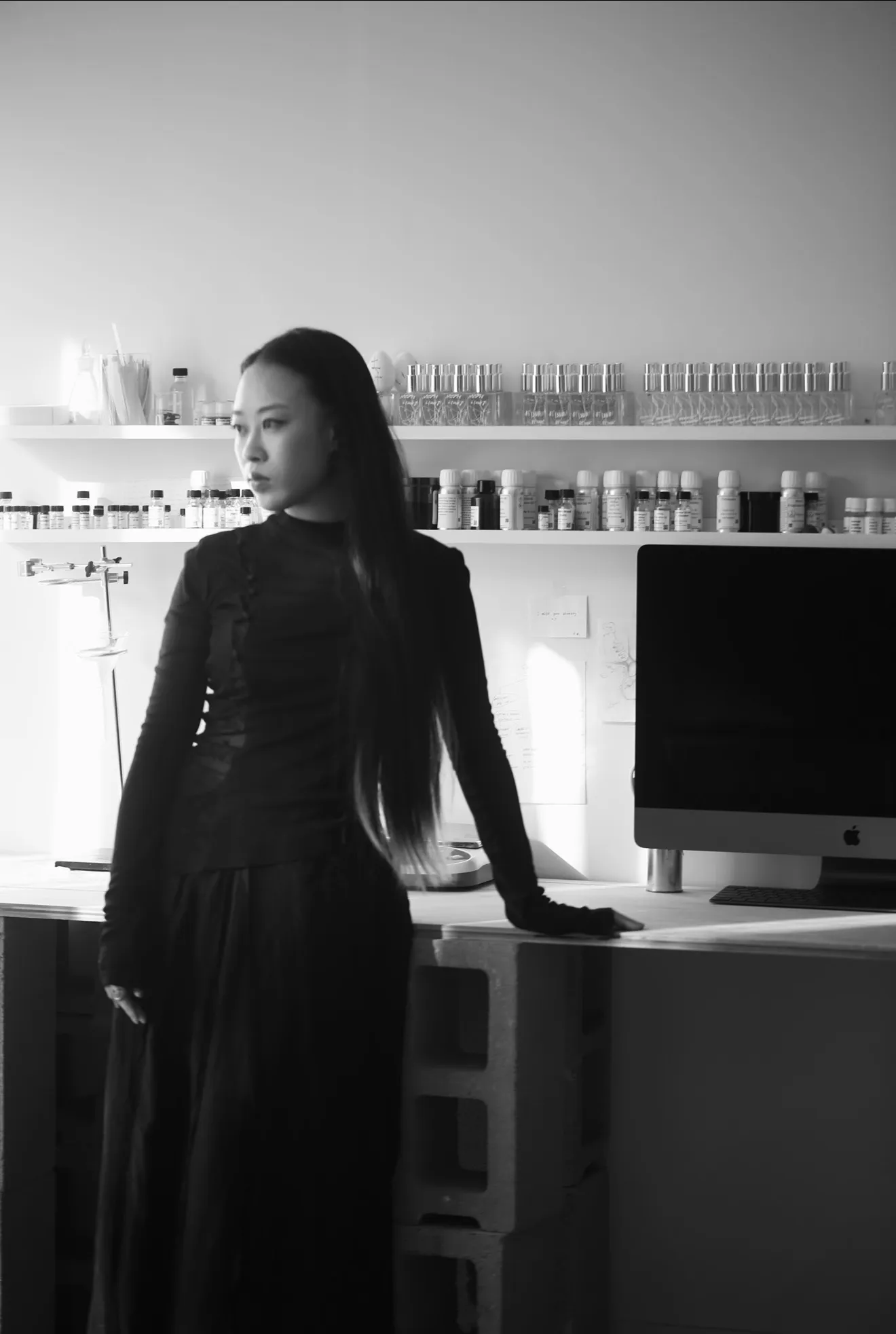
For Hannah Wu, founder and perfumer behind Perfume Who, that question became the starting point for a practice that moves between fragrance, cinema, visual art and object design.
Based in Brooklyn, Perfume Who approaches perfume as more than something to wear. The studio describes its work as “adding scent to silent cinema” — creating an invisible layer of storytelling that allows fragrance to become another way of entering a visual world.
Hannah’s relationship with fragrance began while studying Cosmetics and Fragrance Marketing at the Fashion Institute of Technology. During that time, a photographer friend asked her to create a scent for an exhibition. Seeing the fragrance alongside the photographs changed the way she thought about perfume. She continued creating scents for herself before later studying perfumery at ISIPCA.
A few years after that first exhibition, Hannah had the opportunity to create fragrances for two fashion designers she had worked with. Those experiences eventually gave her the confidence to establish Perfume Who.
What Would This Film Smell Like?
Cinema has remained one of the most important starting points for Hannah’s creative process.
During college, she took an avant-garde film class and became particularly interested in surrealist cinema. The first fragrance she created for Perfume Who was inspired by Maya Deren’s At Land.
The film’s ocean, driftwood and smoke stayed with her. Rather than simply appreciating those elements visually, Hannah began wondering what the film itself might smell like.
Because At Land is silent, fragrance offered another way to enter its world.
That question eventually became the fragrance At Land. Other creations followed a similar path, including Meshes of the Afternoon, also inspired by Deren, and Mothlight, inspired by the film by Stan Brakhage.
For Hannah, cinema does not provide a strict formula. Instead, it provides a place to begin.
A fragrance might start with a film, but it can just as easily begin with a sentence, a texture, a memory or something encountered unexpectedly during a walk. Hannah recalls noticing tree moss in a park and becoming unable to stop thinking about it.
These impressions are collected without necessarily knowing what they will become.
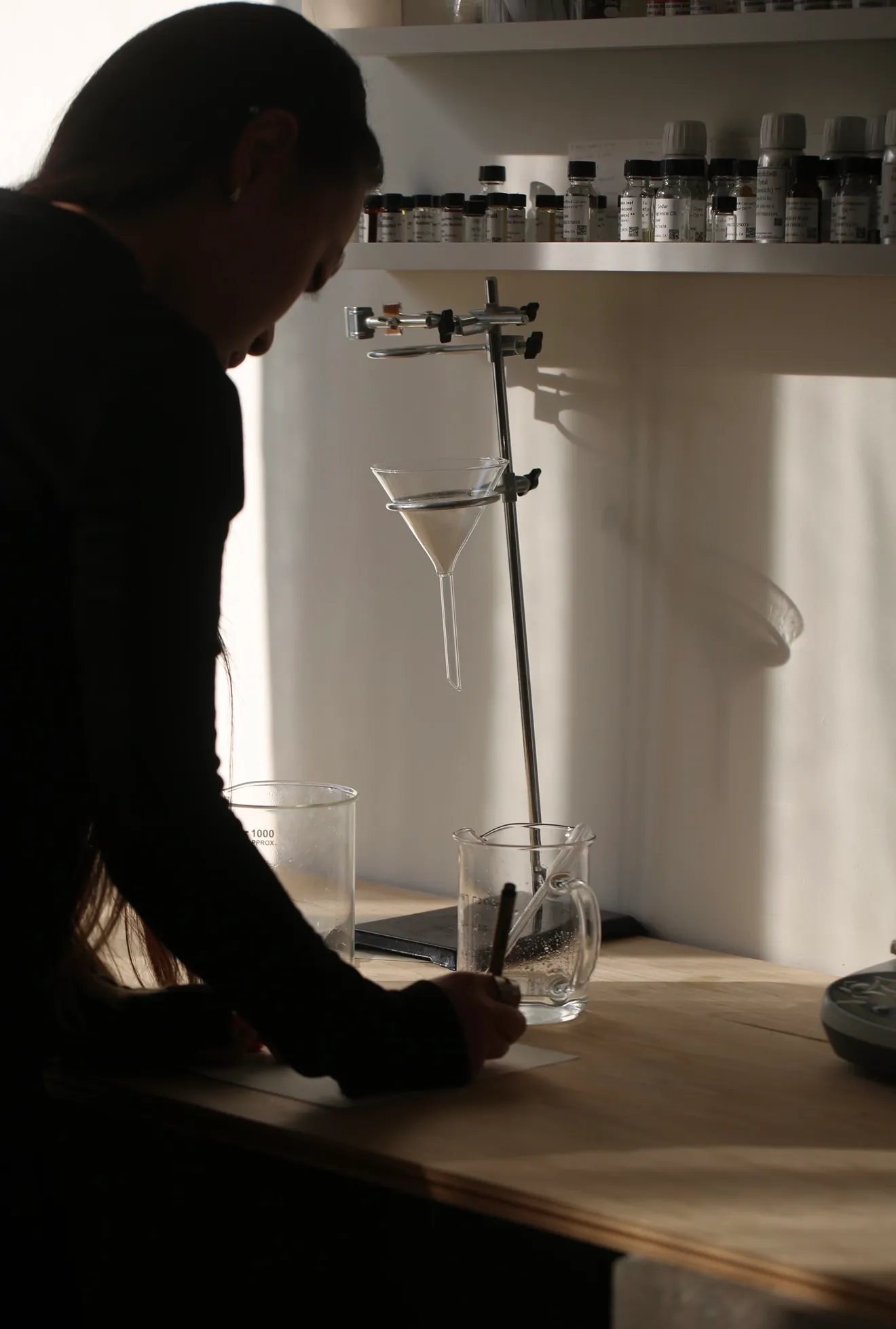
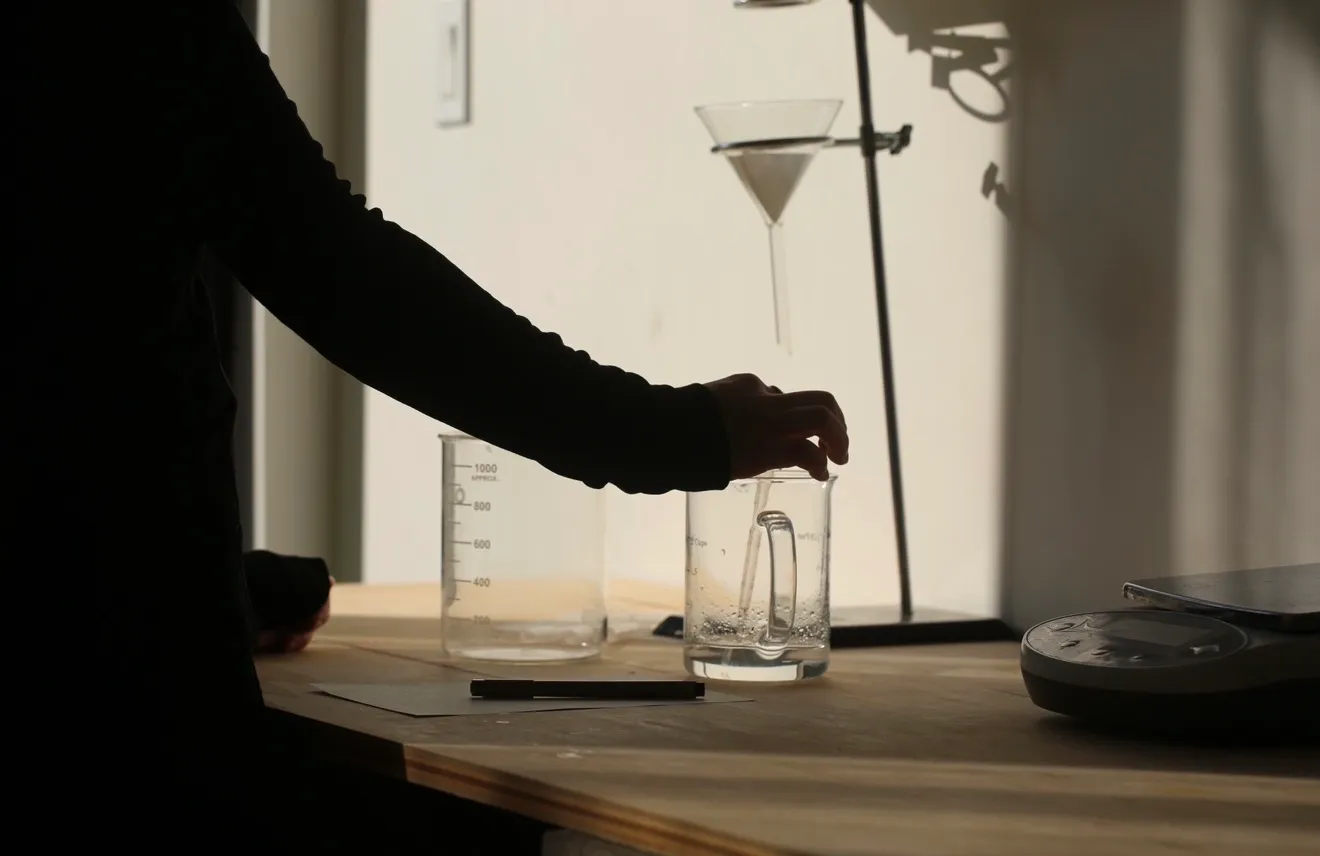
When developing At Land, she wrote down the elements the film brought to mind — driftwood, ocean, smoke and landscape — and then began looking for materials that could translate those impressions into scent. Calone and a seaweed accord helped create the feeling of the ocean, while frankincense introduced a smoky quality.
The intention, however, is not to recreate a scene exactly.
Instead, Hannah tries to create something that gives her the same feeling.
A Fragrance Is Only Part of the World
The relationship between perfume and its physical presentation is equally important to Perfume Who.
Because scent cannot be seen, the object surrounding it becomes the first point of contact. A person might encounter a photograph or pick up the bottle before ever smelling the fragrance. Hannah wants that first encounter to feel as though it belongs to the same world as the scent itself.
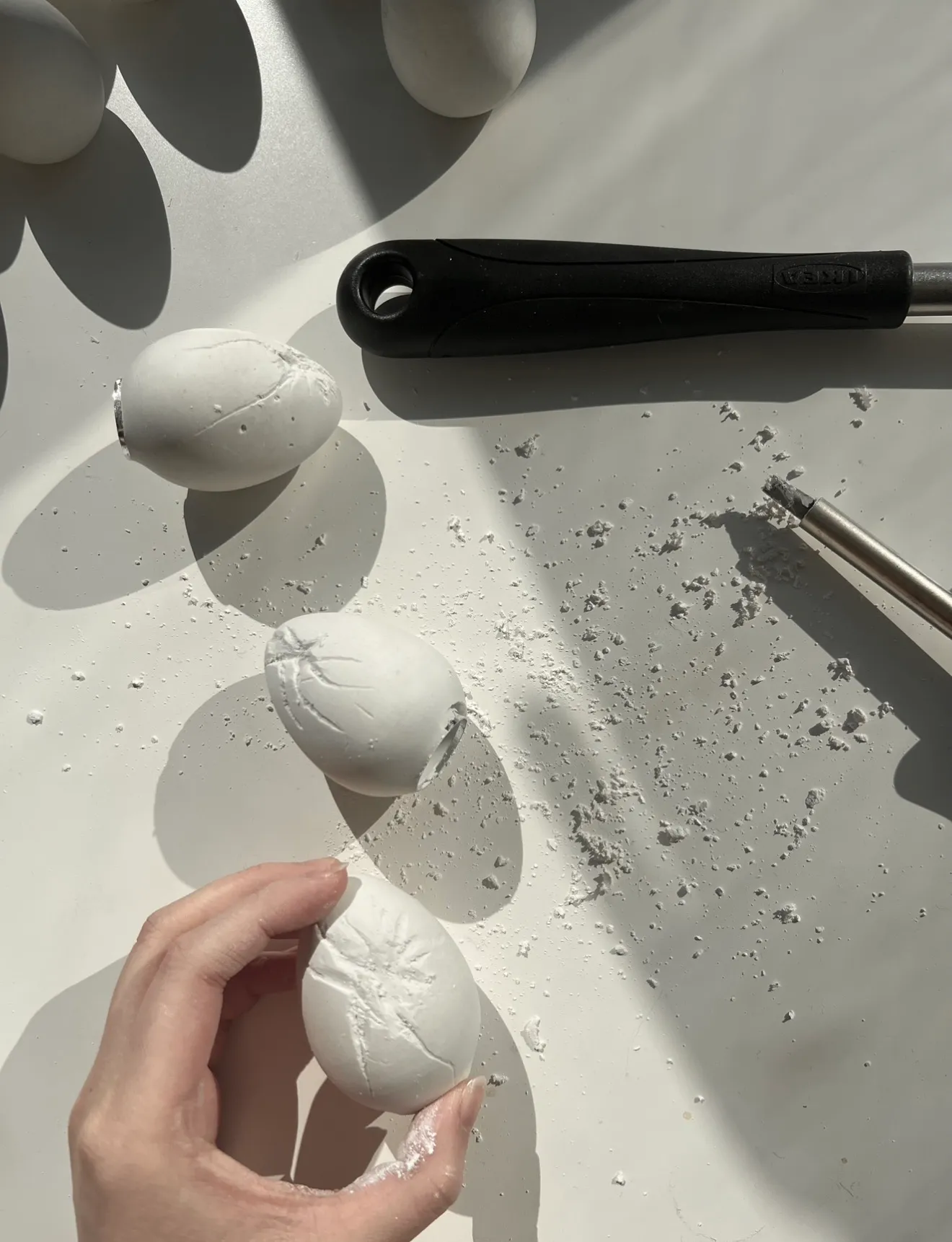
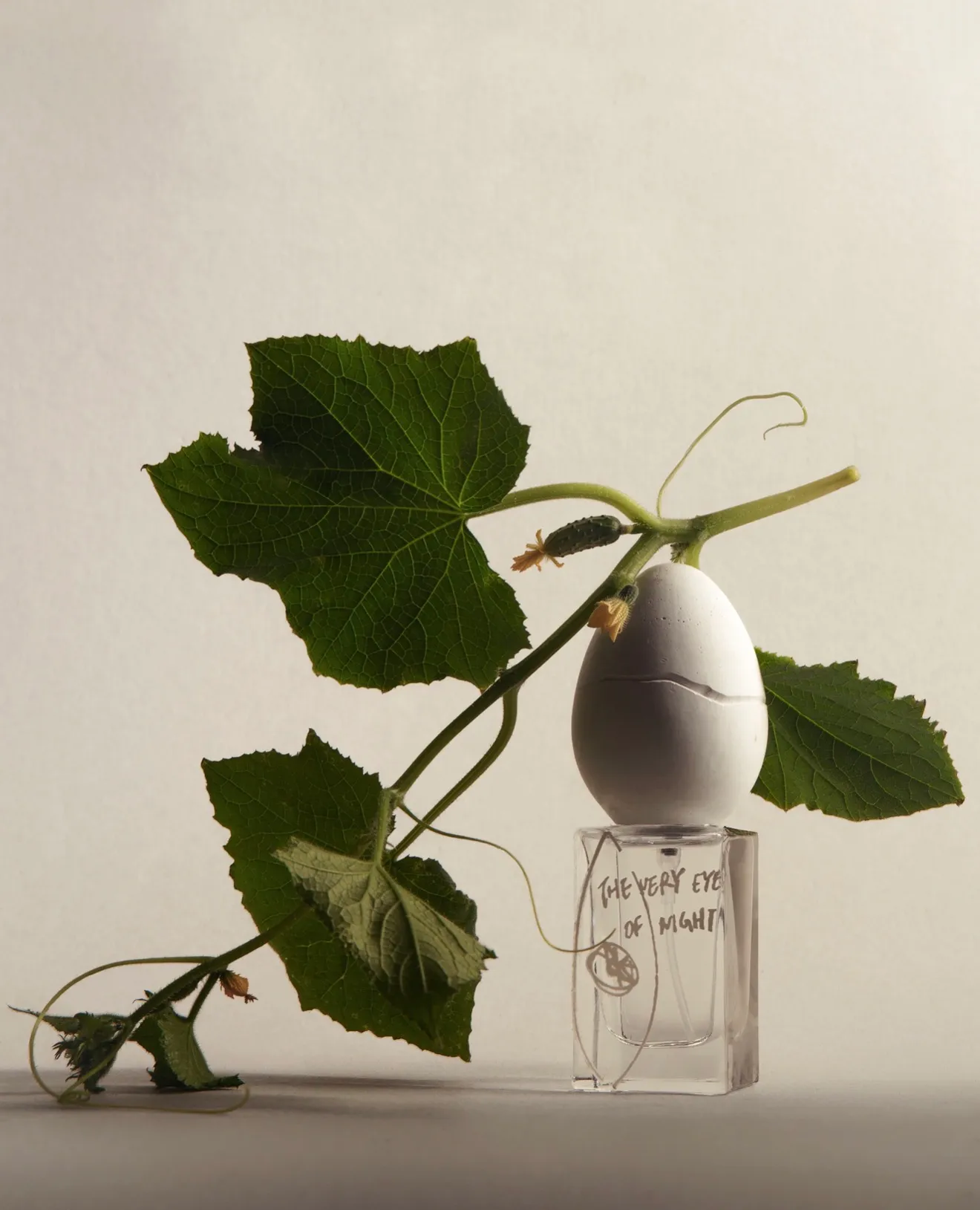
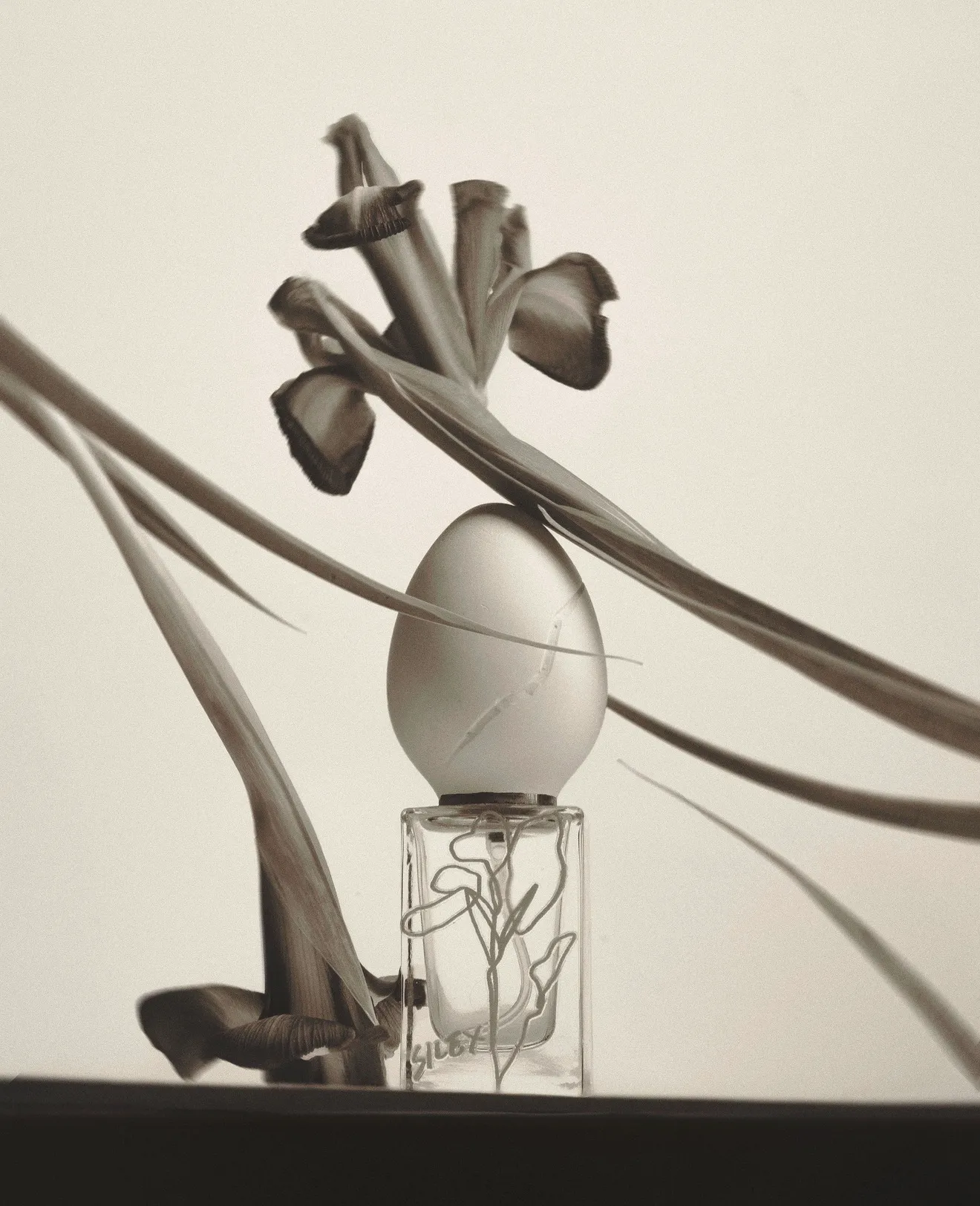
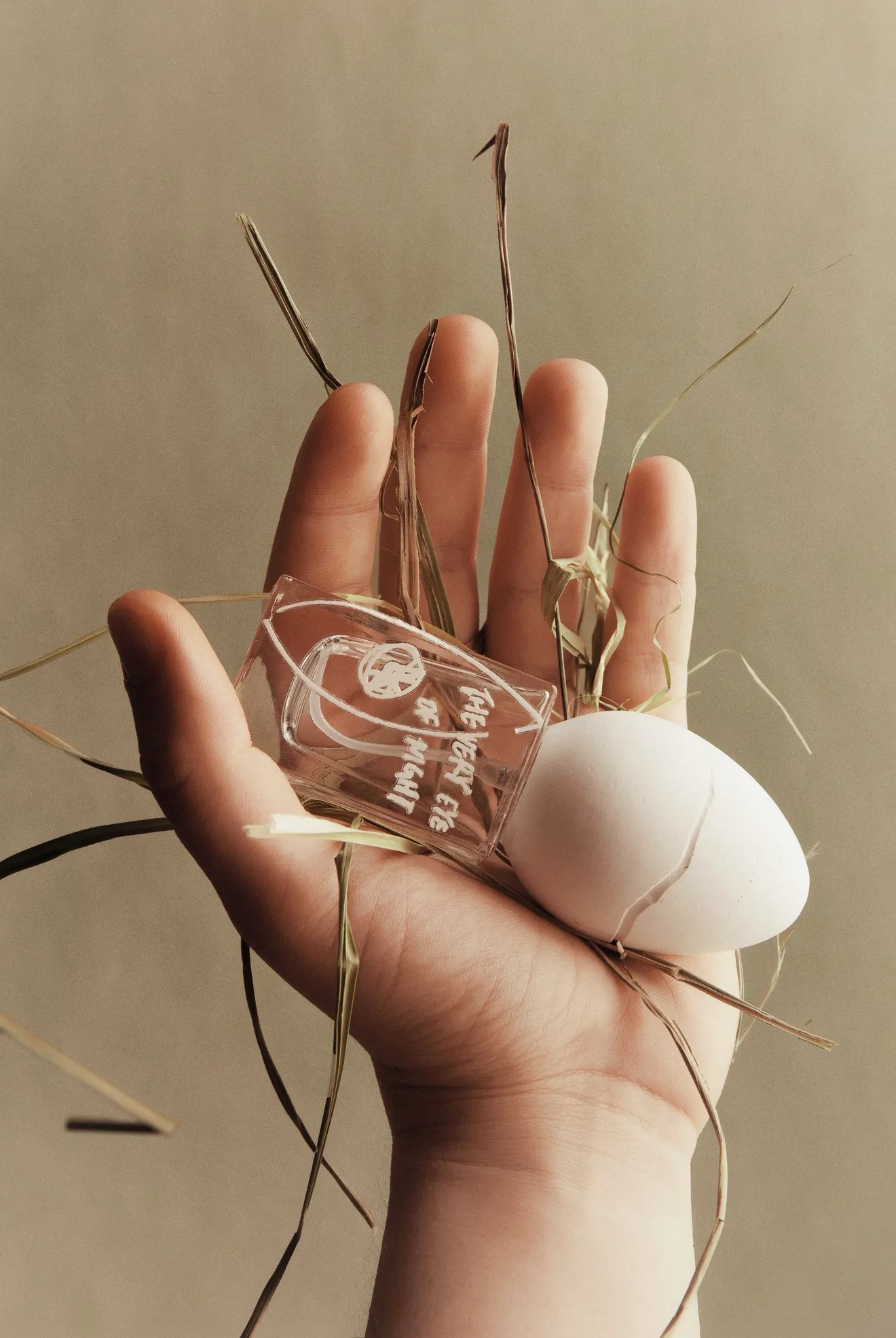
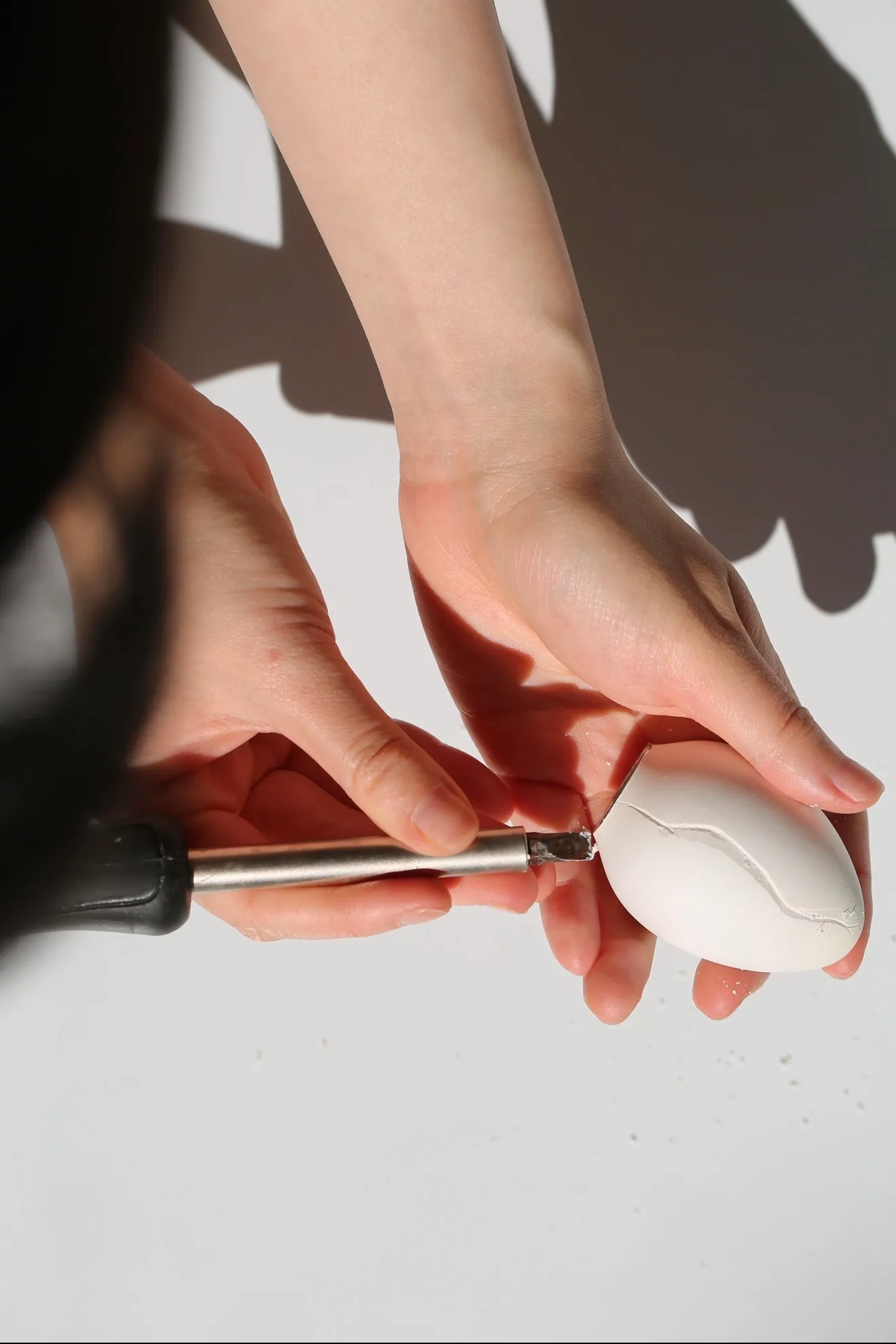
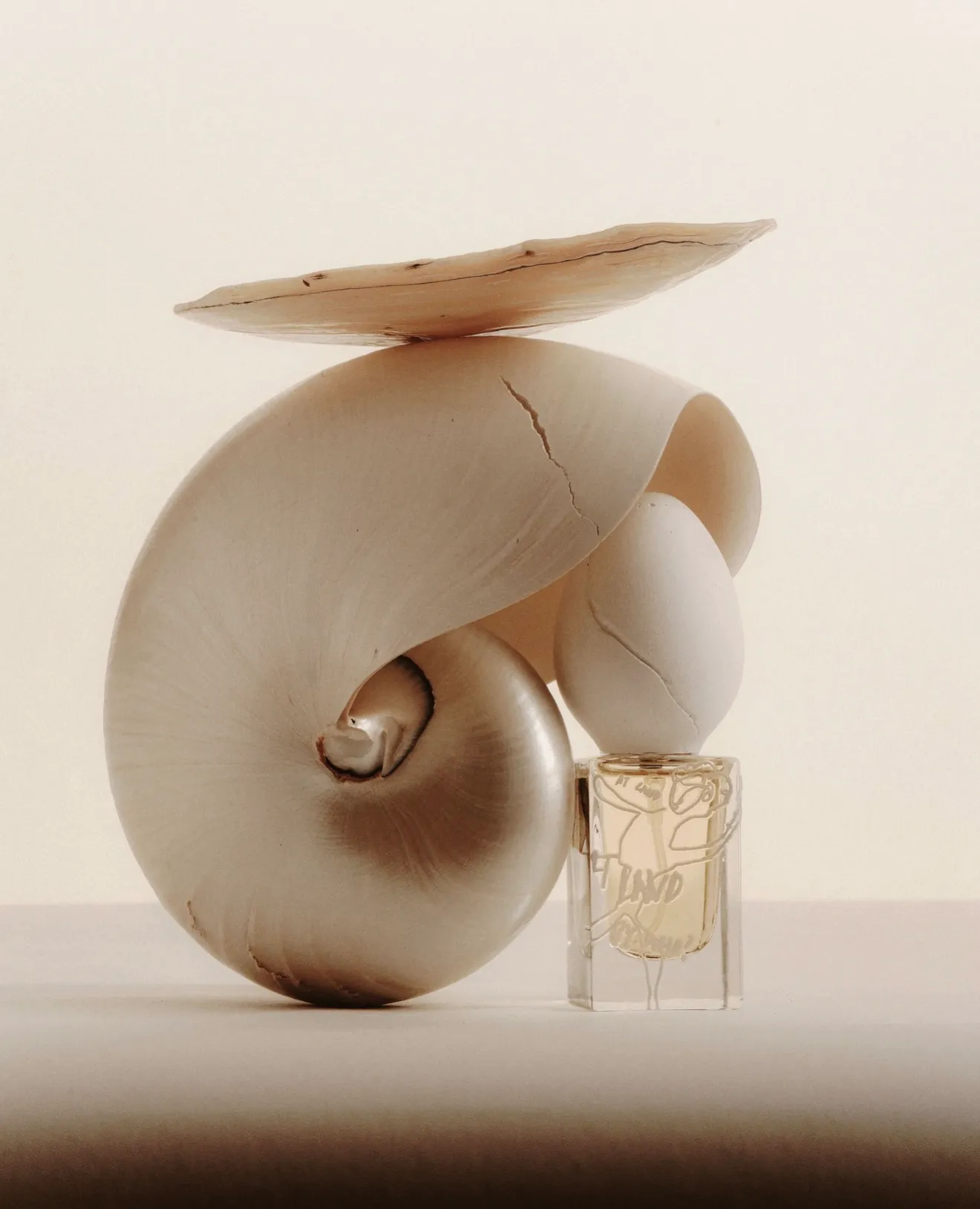
This philosophy can be seen in the studio’s distinctive hand-carved plaster egg caps.
The egg was not the result of a predetermined concept. Hannah experimented with different shapes and materials, including resin cubes, triangles and air-dry clay, before creating the egg shape and immediately feeling that she had found the right form.
Its meaning developed over time.
She began associating the shape with fragility, protection and the possibility of something changing inside.
Each plaster cap also comes out slightly differently. That imperfection is intentional. Rather than creating objects that feel overly polished or identical, the variations give each one its own character.
The cap can also continue to exist after the perfume itself is gone. It can be used as a diffuser or simply kept as an object within the home.
In that sense, the fragrance becomes something that can remain part of someone’s surroundings even after the bottle is empty.
Between Dream and Memory
Surrealist cinema continues to shape Hannah’s way of thinking.
She repeatedly returns to Maya Deren’s films and their relationship with the subconscious. What interests her is the feeling of being inside a dream — recognizing what you are seeing while the sequence of events remains slightly unfamiliar or impossible.
That same sensibility appears throughout Perfume Who’s approach to fragrance.
Another important reference is Jun’ichirō Tanizaki’s essay In Praise of Shadows, which encouraged Hannah to pay closer attention to quieter elements: surfaces, shadows and the atmosphere of a room.
But inspiration does not always arrive through deliberate research.
Sometimes, it comes unexpectedly.
A smell encountered during a walk can suddenly bring back a memory that had seemingly disappeared. This relationship between scent and recollection is central to the experience Hannah hopes to create for others.
She does not expect everyone to find the same thing in her fragrances.
In fact, she prefers the opposite.
Finding Something of Your Own
Scent is deeply personal. The same fragrance can lead two people toward entirely different memories, places or emotions.
For Hannah, that unpredictability is part of what makes perfume interesting.
She hopes her fragrances might bring someone back to a memory — perhaps even one they had forgotten. She recalls someone telling her that Mothlight reminded them of their childhood, an interpretation she found particularly beautiful.
The goal is therefore not for someone to see exactly the scene she imagined while creating a fragrance.
It is for them to discover something of their own.
This makes Perfume Who feel less like an attempt to control a narrative and more like an invitation into one.
The fragrance provides the starting point. What happens after that belongs to the person experiencing it.
The World Continues to Expand
Perfume Who’s practice is also moving beyond fragrance itself.
The studio has worked with local ceramicist Sanjana Lahiri of Mudroom on a soap holder inspired by Hideyuki Oka’s How to Wrap Five Eggs. The collaboration reflects Hannah’s growing interest in creating objects that people can use, keep and incorporate into their everyday lives.
A sixth fragrance is also planned for release by the end of November, marking another step in the studio’s continuing exploration of scent and storytelling.
From photography and cinema to plaster, ceramics and perfume, Perfume Who exists within a space where different forms of art can overlap.
At its centre is still a simple question: what would this world smell like?
But the answer is never simply a fragrance.
It can be a memory, a film, a shadow, a landscape, an object or a feeling that is difficult to describe in words.
Perfume Who gives those invisible impressions another form — creating fragrances that invite us not only to smell, but to remember, imagine and find our own way into the story.
PERFUME WHO
Founded by Hannah Wu
Brooklyn, New York
Instagram: @perfume_who