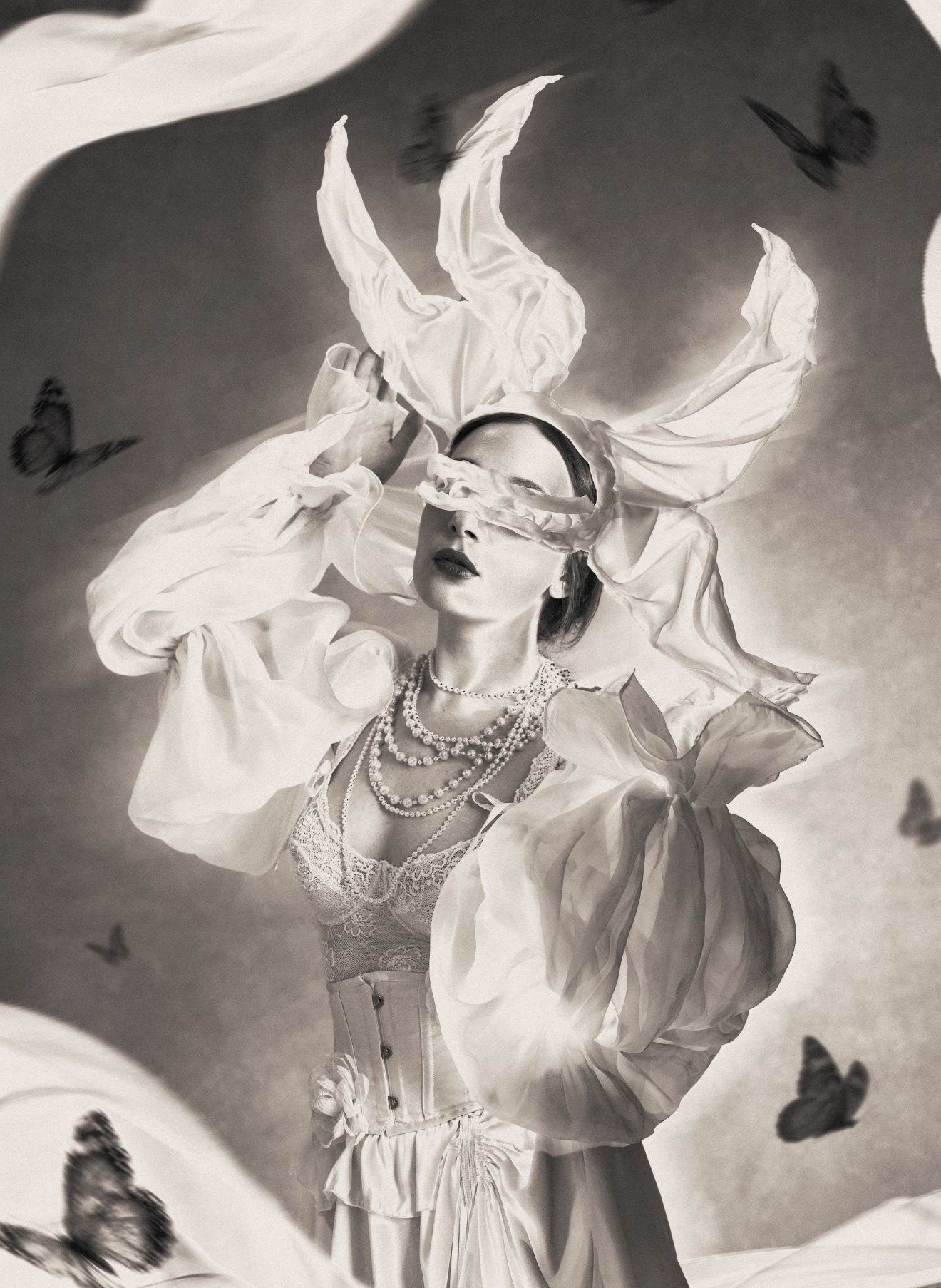
Escapism: Where Reality Meets the Inner World
Published October 7, 2026
There is a space between reality and imagination where the boundaries of the outside world begin to disappear. In Escapism, photographer and art director Dorothy Stevens explores that space through a series that turns inward, using the body, double exposure and delicate butterfly imagery to create a visual language around thought, emotion and inner states.
At the center of the series are closed eyes, presented as a doorway rather than an ending. Turning away from the outside world becomes an invitation to look inward, toward the constantly changing landscape of the mind. The butterflies reinforce this idea. Light, free and ever-changing, they appear and disappear throughout the imagery much like thoughts themselves — difficult to hold onto, constantly moving and never entirely predictable.
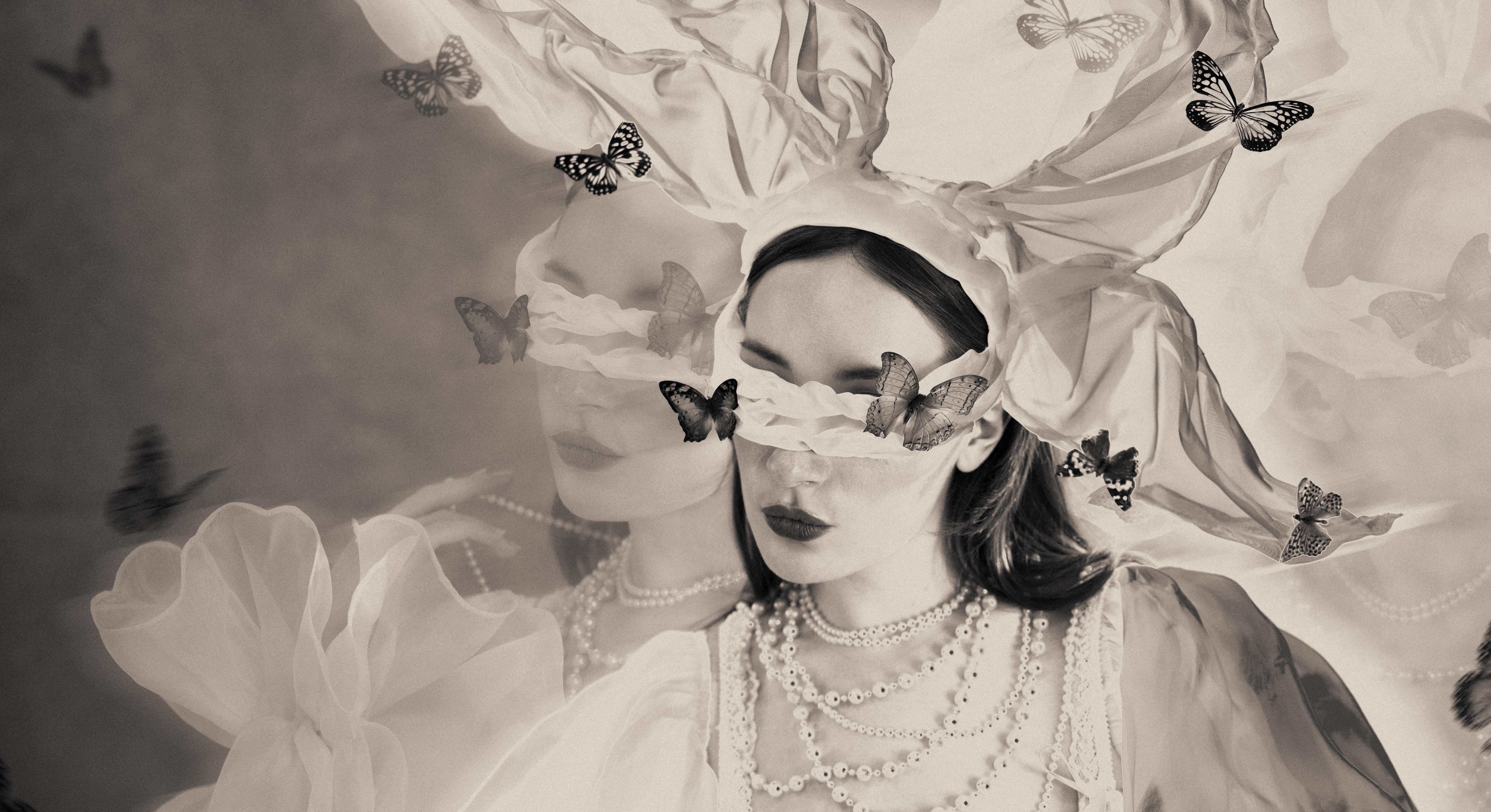
The series becomes particularly atmospheric through its use of double exposure. Rather than keeping the figure separate from the environment, Stevens allows the two to overlap and dissolve into one another. The subject becomes part of her surroundings, making it increasingly difficult to distinguish where the body ends and the environment begins. Reality consequently feels less fixed, taking on a fragile and dreamlike quality.
This dissolution gives Escapism its experimental character. Instead of presenting an escape as a literal movement away from reality, the series considers escapism as an internal experience — a temporary shift toward the world that exists within us. The photographs occupy that uncertain space between what is physically present and what is emotionally or mentally experienced.
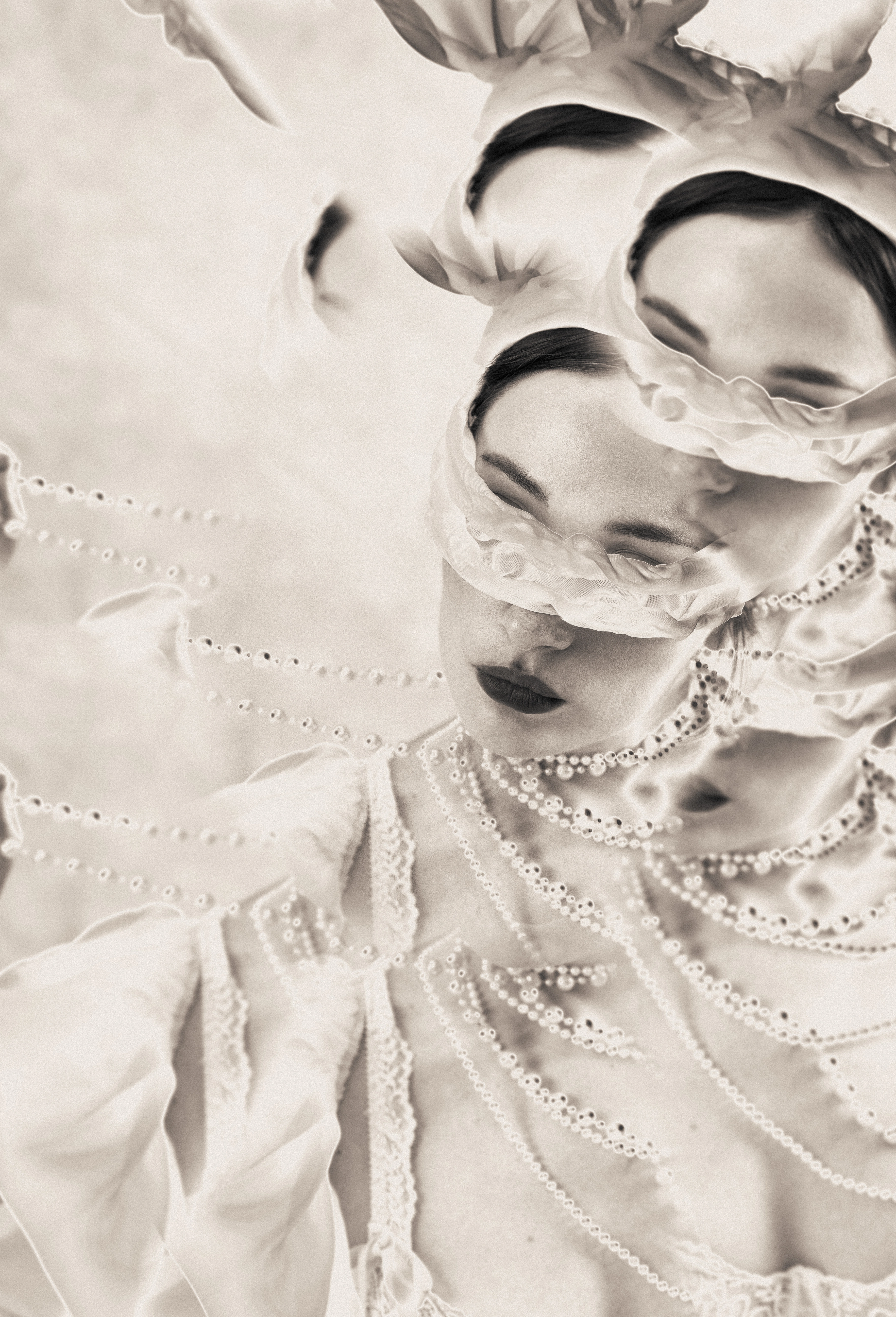
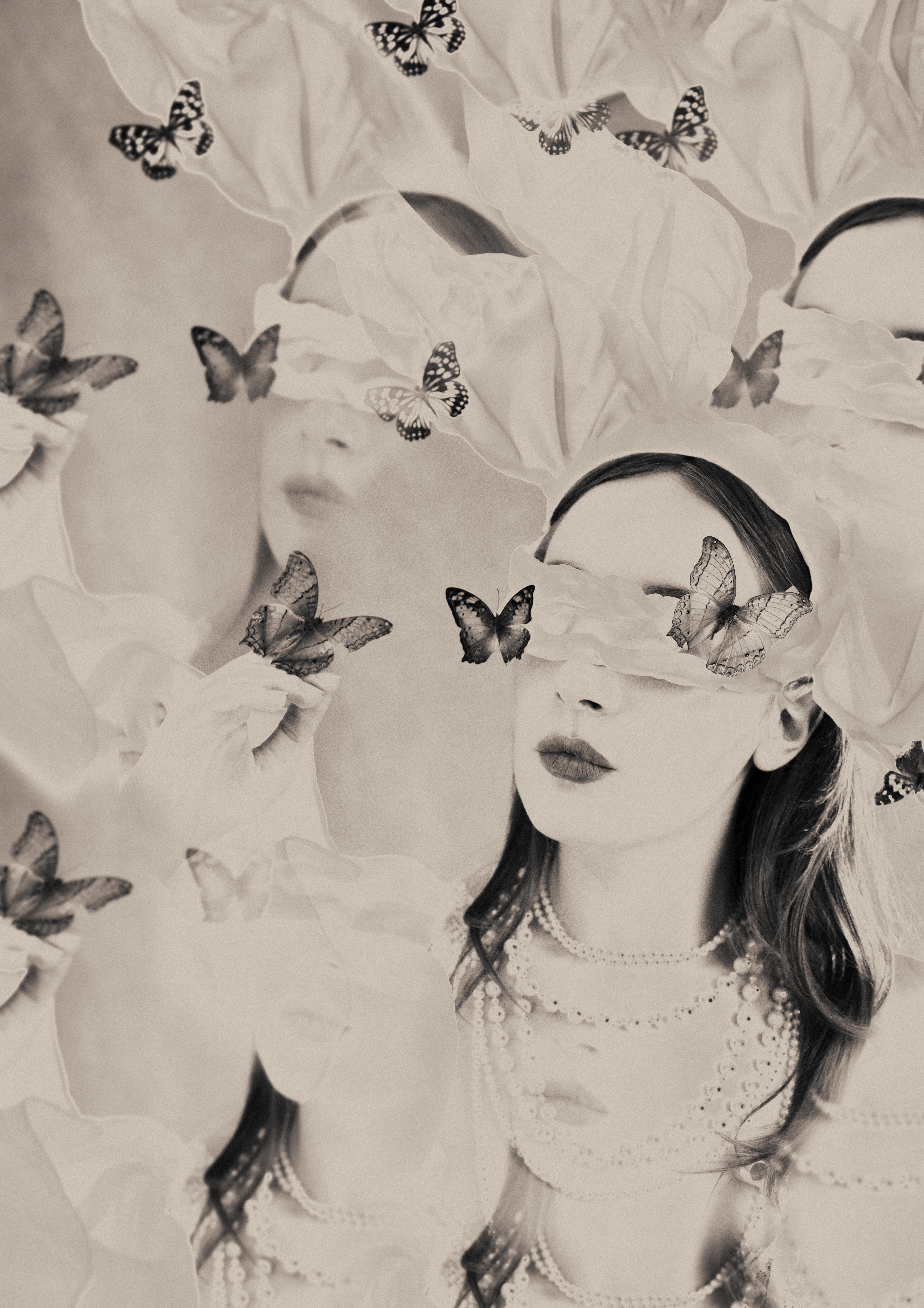
There is also a sense of freedom within this uncertainty. The butterflies are not simply decorative elements; they become visual representations of an inner world that refuses to remain still. Their movement echoes the changing nature of thought, while the layered exposures suggest how memory, imagination and surroundings can coexist within a single moment.
Through this approach, Escapism becomes a study of the relationship between the visible and invisible. Stevens does not attempt to define exactly what exists beyond the closed eyes. Instead, the imagery leaves room for the viewer to enter that space themselves, allowing the photographs to remain open to personal interpretation.
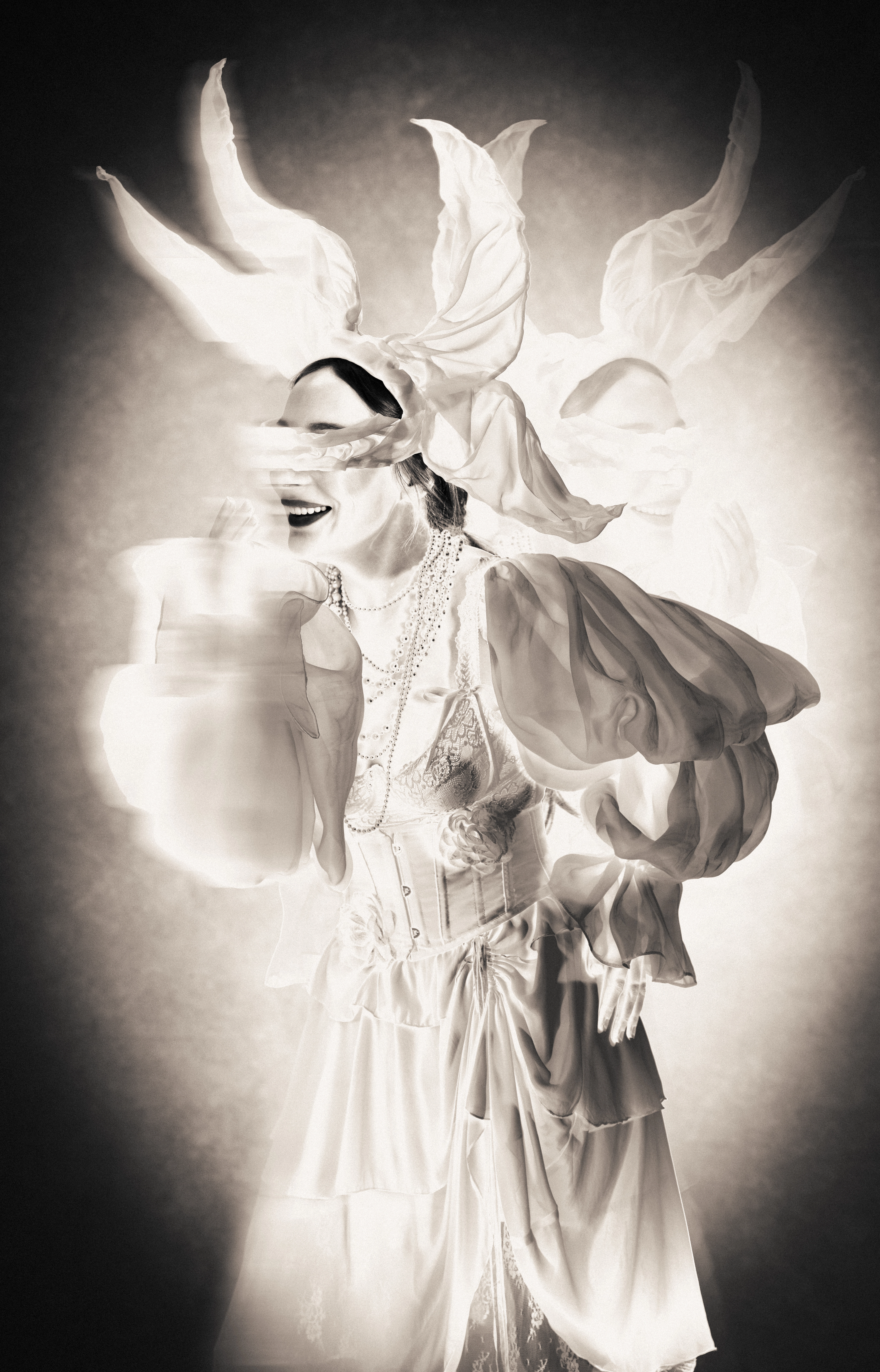
The result is a series that feels intimate without being overly literal. Its visual language is built around disappearance, transformation and the quiet act of turning inward. Between butterflies, layered bodies and dissolving environments, Escapism asks us to consider how easily reality can shift when viewed through the lens of our inner world.
Credits
Art Direction & Photography: @dorothystevens
Styling: @gibson_rent
Headdress: @margarita__starostina
Model / Makeup / Hair: @cathestrasia
Photographer’s Assistants: @malashingraphics, @marrrgarin