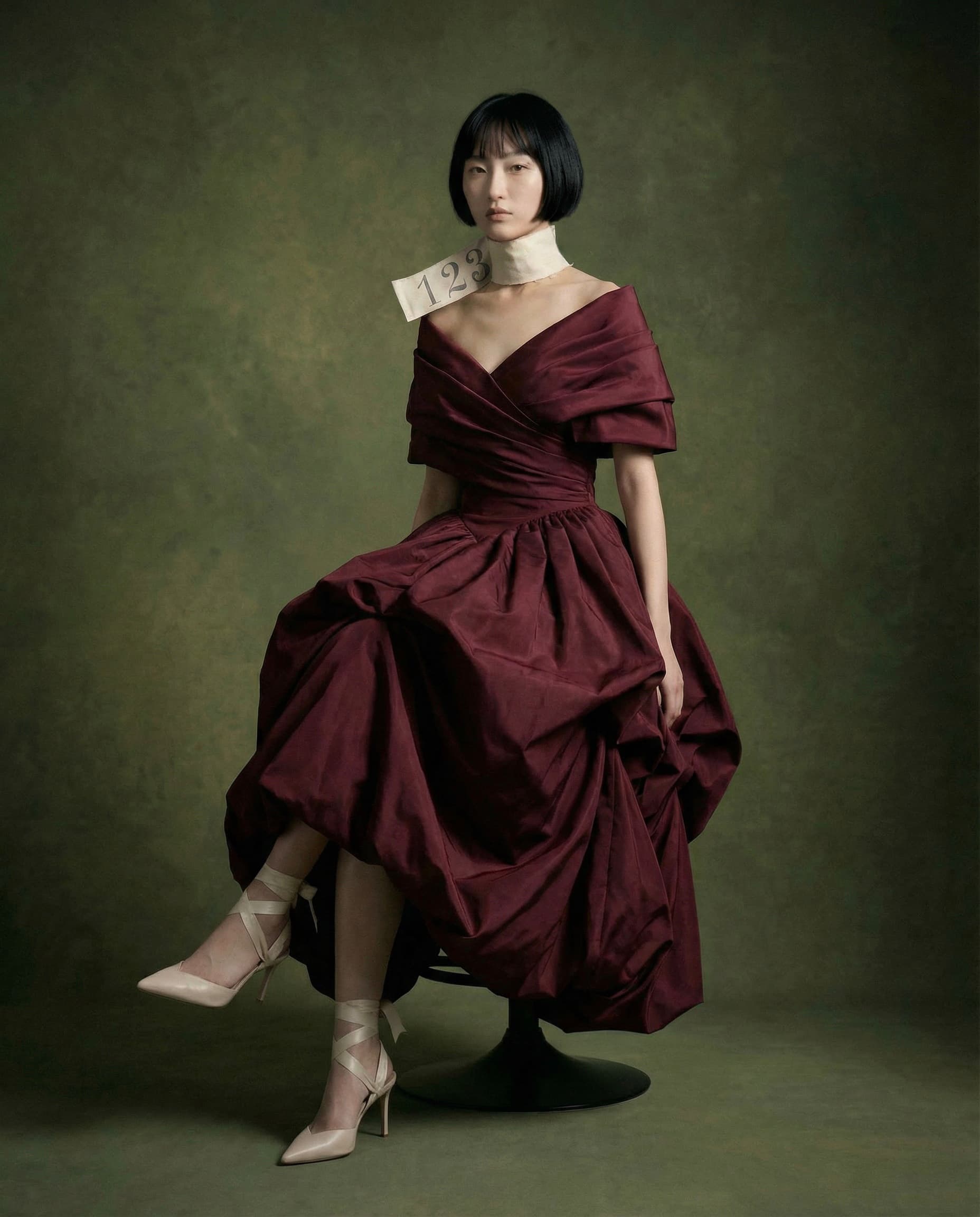
Being a creative director has taught me that a real brand goes far beyond printing a name on a hoodie or placing a logo on a shirt. Today, many people say they "have a brand," but a brand is not merch.
It's not ink on cotton. It's vision, intention, and narrative. It's knowing what you stand for before you decide what you sell. A true brand carries emotion, culture, and perspective, it speaks even when the logo is removed. If your identity disappears without the graphic, then you're not building a brand, you're producing products. Build something that tells a story, something that creates belonging, something that survives trends.
"A brand is not a logo on fabric it's a story stitched into identity."
There is something increasingly fascinating about the way we talk about brands today. Having a brand has become, for many, less about building an identity and more about having something tangible to attach to an online persona.
Put a name in the Instagram bio, print it across a hoodie, create a few pieces, and suddenly the word brand enters the conversation. The appearance of ownership can sometimes become more important than the substance behind it.
But a label does not automatically create an identity.
We are living in a moment where visibility is often mistaken for value. A logo photographed in the right setting can make something appear established, while a carefully curated Instagram feed can create the impression of a fully developed fashion house. Yet when you look beyond the surface, there may be no world behind the product no philosophy, no story, no cultural reference, no reason for the garment to exist beyond carrying a name.
And this is where the difference between merchandise and a brand becomes impossible to ignore.
Merchandise can carry a graphic. A brand carries meaning.
There is nothing wrong with producing hoodies, T-shirts, caps, or other accessible pieces. The problem begins when the product itself becomes the entire identity. Printing a name across ten different garments does not automatically create recognition; sometimes it only creates repetition. If the only recognizable element is the word printed on the chest, remove that word and ask yourself what remains.
A genuine brand should be able to exist beyond its logo. Its identity should live in the details in the way a garment is cut, the way a campaign is photographed, the references it chooses, the communities it speaks to, and even the emotions it creates in someone who encounters it for the first time.
This is especially important in fashion, where clothing has always been more than a functional object. What we wear can communicate where we come from, what we believe, what we admire, what we reject, and how we want to be perceived. A fashion brand therefore has an opportunity to create an entire language rather than simply a collection of products.
The strongest brands understand this. Their names become recognizable because the identity existed before the recognition. You can remove the logo from the garment and still understand who made it. You can see a silhouette, a campaign, a fabric choice, or a particular visual treatment and immediately feel that it belongs to a certain universe.
That is the difference between branding and decoration.
And perhaps the obsession with simply having a brand comes from the desire to belong to something bigger. In the age of social media, putting a company name beside your own name can feel like a statement of ambition. It can make an account look more established, more professional, more creative. But an Instagram handle is not a business model, and a name in a bio is not an identity.
The question should never be, "How can I make people know my brand exists?"
The deeper question is, "Why should anyone care that it exists?"
That answer cannot be printed onto a hoodie.
It has to be built.
It comes from consistency, experimentation, research, culture, storytelling, and a willingness to develop an identity that does not depend entirely on what is trending this month. Trends can give a brand visibility, but they cannot give it a soul. A product can attract attention, but only a meaningful identity can create attachment.
Building a brand takes time because identity takes time. It requires knowing what you want to say before deciding how you want to sell it. It requires understanding who you are speaking to without becoming entirely defined by what that audience expects. And most importantly, it requires creating something that can evolve without losing its foundation.
Because when the trend disappears, the logo changes, and the algorithm moves on, the only thing that remains is what you actually built.
A brand should not simply tell people what you sell.
It should give them a reason to remember why you exist.
A brand is not a logo on fabric. It's a story stitched into identity.